Strategy board chair's foreword: A year of progress for the code

Richard Standford

It has been an exciting time to chair the Woodland Nature Markets Strategy Board for the Woodland Carbon Code.

During this period, the Woodland Carbon Code team has made significant progress through a range of development projects, including publishing version 3 of the code and applying to be assessed by the Integrity Council for the Voluntary Carbon Market.

Since its launch in 2011, the Woodland Carbon Code has become the most advanced example of a natural capital market in the UK. By incentivising tree planting, the code plays a vital role in supporting the UK’s environmental commitments and the aim to reach net zero by 2050.

Internationally, the code is recognised as one of the world’s leading carbon standards, providing a model for developing high-integrity nature-based markets.

I look forward to seeing the Woodland Carbon Code continue to bring landowners, businesses and communities together to help address the climate and biodiversity crises.

Richard Stanford 
Chair, Woodland Nature Markets Strategy Board 2025
Chief Executive, Forestry Commission

Welcome | Fàilte | Croeso

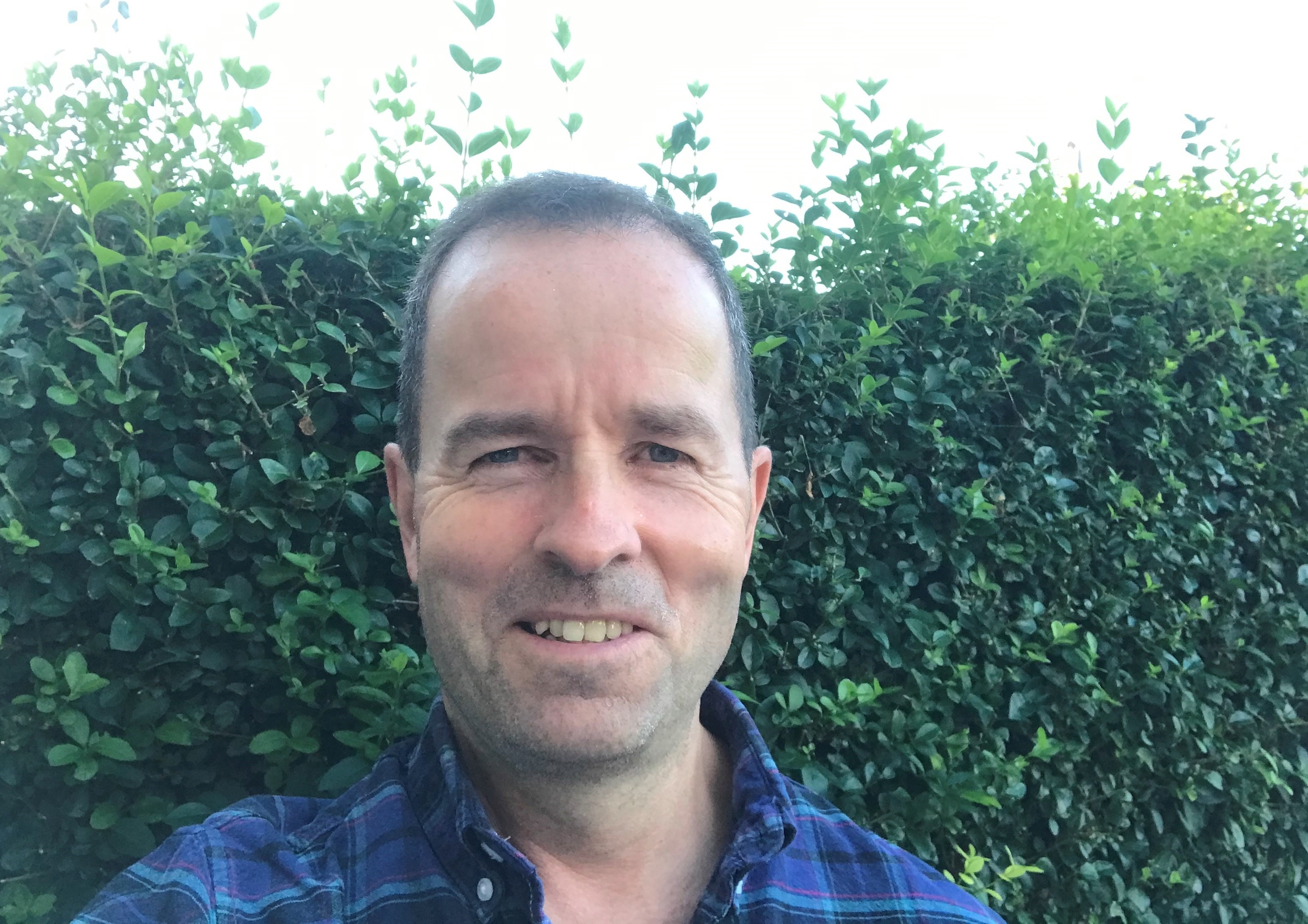
Pat Snowdon in front of bushes

Leugh sa Ghàidhlig | Darllen yn y Gymraeg

Welcome to the Woodland Carbon Code 2025 to 2026 annual report.

This year, the Woodland Carbon Code has continued to expand its impact, supporting woodland creation across the UK and strengthening confidence in high integrity carbon markets.

Our impact

The code continues to make a significant contribution to woodland creation and UK greenhouse gas reduction targets.

In 2025 to 2026:

  • 145 projects were validated to the code
  • 6,762 hectares of new woodland were created  

Projects validated to the code are now predicted to sequester 15.7 million tonnes of carbon dioxide equivalent over their lifetime.

Together, these projects are contributing to high integrity climate action while delivering wider benefits for nature and communities.

Development and improvement

We are committed to continually improving the code to maximise its impact, working with experts and stakeholders across the sector. We will use new technologies to provide a faster and more inter-connected validation and verification process.

During 2025 to 2026, we progressed a range of key development activities, including:

  • Launching version 3 of the code 
  • Entering assessment with the Integrity Council for the Voluntary Carbon Market 
  • Developing new technologies through CivTech

We supported partners to explore future market developments, including:

  • Biodiversity measurement and reporting
  • A woodland carbon purchase fund
  • A woodland water code
  • British Standards Institution market standards

Recognition

We were delighted that the Woodland Carbon Code was named as a winner in the 2025 Bloomberg Philanthropies Local Leaders Climate Awards at the COP30 Local Leaders Forum in Rio de Janeiro in November.

The Woodland Carbon Code and Scottish Government received the Power of Partnership award, recognising our work in bringing landowners, companies and communities together to support woodland creation and climate action.

We were also pleased that Dr Vicky West, the code’s Senior Development Manager, and Alex MacKinnon, one of our advisory board members, were shortlisted in the Confor Awards. Vicky and Alex were nominated in the net zero innovation category, recognising their contribution to the forestry and wood industry's efforts to deliver the UK's net zero ambitions.

These recognitions highlight the code’s growing influence in UK and international climate action.

Thank you

I would like to thank our partner organisations, project developers and carbon buyers for their continued support. The success of the code is a testament to your expertise, commitment and collaboration.

By working together, we are making a vital contribution to our natural environment and helping to address the climate crisis.

Pat Snowdon
Head of Economics and the Woodland Carbon Code 
Scottish Forestry

Please email us if you would like a Gaelic or Welsh version of this report.  

Our vision and mission

Vision: Thriving woodlands for climate, nature and people

Mission: To provide the trusted standard for high integrity woodland carbon projects across the UK.

In numbers

 All time2025 to 2026
Projects  
Projects registered2,347189
Projects validated907145
Area validated (hectares)45,4676,762
Projected sequestration of validated projects (tonnes of carbon dioxide equivalent)15.7 million2.7 million
Units  
Pending Issuance Units listed11.4 million1.5 million 
Woodland Carbon Units issued or converted from Pending Issuance Units10,321291
Woodland Carbon Units retired4,64335


Projected sequestration of Woodland Carbon Code projects.

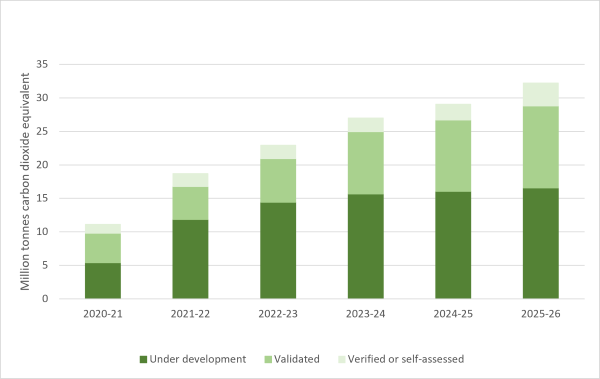
The graph below shows the projected sequestration of all code projects from 2020-2021 to 2025-2026. This is split into projects under development, validated and verified or self-assessed.

Bar chart showing the projected cumulative sequestration of woodland projects from 11 million tonnes of carbon dioxide equivalent in 2020-2021 to 32 million in 2025-2026

See our statistics page for more.

About the code

The Woodland Carbon Code is the UK’s government-backed standard for creating new woodlands that generate high-integrity carbon credits. Projects developed under the code help to tackle climate change, support nature and benefit communities.

The code provides independently verified carbon units, generating income for landowners and enabling organisations to compensate for unavoidable emissions.

Alongside carbon removal, Woodland Carbon Code projects provide a range of other benefits for nature and society. This includes enhanced biodiversity, local employment opportunities, cleaner water, improved air quality, flood prevention, advantages for farming and improvements in health and wellbeing.

The code is delivered by Scottish Forestry on behalf of the governments of the UK, Scotland, Wales and Northern Ireland. 

Governance

Woodland Nature Markets Strategy Board

The Woodland Nature Markets Strategy Board is responsible for guiding the strategic and operational development of the code.

The chair rotates annually. Naomi Matthiessen, Deputy Director, Landscapes, Nature and Forestry, Welsh Government took over as chair in 2026.

Executive Board 

The Executive Board is the executive body responsible for managing the day-to-day running of the programme, including its application, promotion and technical development. 

The Executive Board welcomed Breandan Mulholland as the new representative for Northern Ireland Forest Service, and thanked Ben Seale for his contributions over the years.

Advisory Board

The Advisory Board provides advice and expertise on the operation, promotion and development of the Woodland Carbon Code. 

The advisory board welcomed new members during 2025-26, all for two-year terms:
•    Kate Palmer, forestry body representative, Confor
•    Matthew Doran, landowner representative, Country, Land and Business Association
•    Alex MacKinnon, Tilhill and Nick Swinburn, Woodland Trust as project developer representatives
•    Clara Guttman Belling, Cresco Capital Services as investor representative
•    Natalia Dorfman, Kita Earth Limited, as a market expert.

Read about our governance structure
 

Our team

The Woodland Carbon Code is delivered by a team of professionals across the UK.

Anna Brand

Operational Manager 

Anna Brand in front of trees

Phoebe Golden

Coordinator 

Billie in natural surroundings

Bruce Auchterlonie

Advisor

Bruce in natural surroundings

Vicky West

Senior Development Manager 

Vicky with a red top

Andrew Baker

Senior Operational Manager 

Andy in a suit

Susan Szymborski-Welsh

Communications Officer

Susan in a snowy landscape with trees

Leon DeBell

Monitoring Advisor

Leon in front of trees

Natalie Meiklejohn

Coordinator 

Nat in front of bushes

Aythya Young

Coordinator

Aythya in front of trees

Pat Snowdon

Head of Economics and Woodland Carbon Code


Pippa Lewis

Geographic Information Systems Officer

Pippa outside


Projects and activities

The Woodland Carbon Code was launched in 2011. Our impact so far:

  • 907 projects validated
  • 45,467 hectares new woodland created
  • 15.7 million tonnes planned carbon dioxide removal  

Key projects in 2025 to 2026

Launch of version 3.0

We launched version 3.0 of the code in August 2025. The update incorporated insights from research and consultation feedback and aligns with national and international frameworks.

The changes make the code more accessible, practical and commercially viable for the land management sector.

Assessment by the Integrity Council for the Voluntary Carbon Market

The Woodland Carbon Code team submitted an application to be assessed by the Integrity Council for the Voluntary Carbon Market in August 2025.

The application passed the completeness check, meaning the Woodland Carbon Code is the first government run carbon standard in the world to enter full assessment.

The Integrity Council will assess the Woodland Carbon Code over the next year.

New platform for the UK Land Carbon Registry

We supported S&P Global to move the UK Land Carbon Registry to a new platform in August 2025.

Communications and engagement

We developed a communications strategy, informed by user insight and team objectives, to enhance awareness and understanding of the code. The team has enhanced communication and engagement by:

  • Establishing a project developers’ forum 
  • Increasing the code’s profile on social media platforms such as LinkedIn
  • Improving our website and newsletter
  • Placing public consultation at the heart of developing the code
  • Participating in events to increase knowledge-sharing about the code and voluntary carbon market
  • Publishing blog posts and articles on key initiatives
  • Running webinars on the operation and development of the code

Exploring new technologies
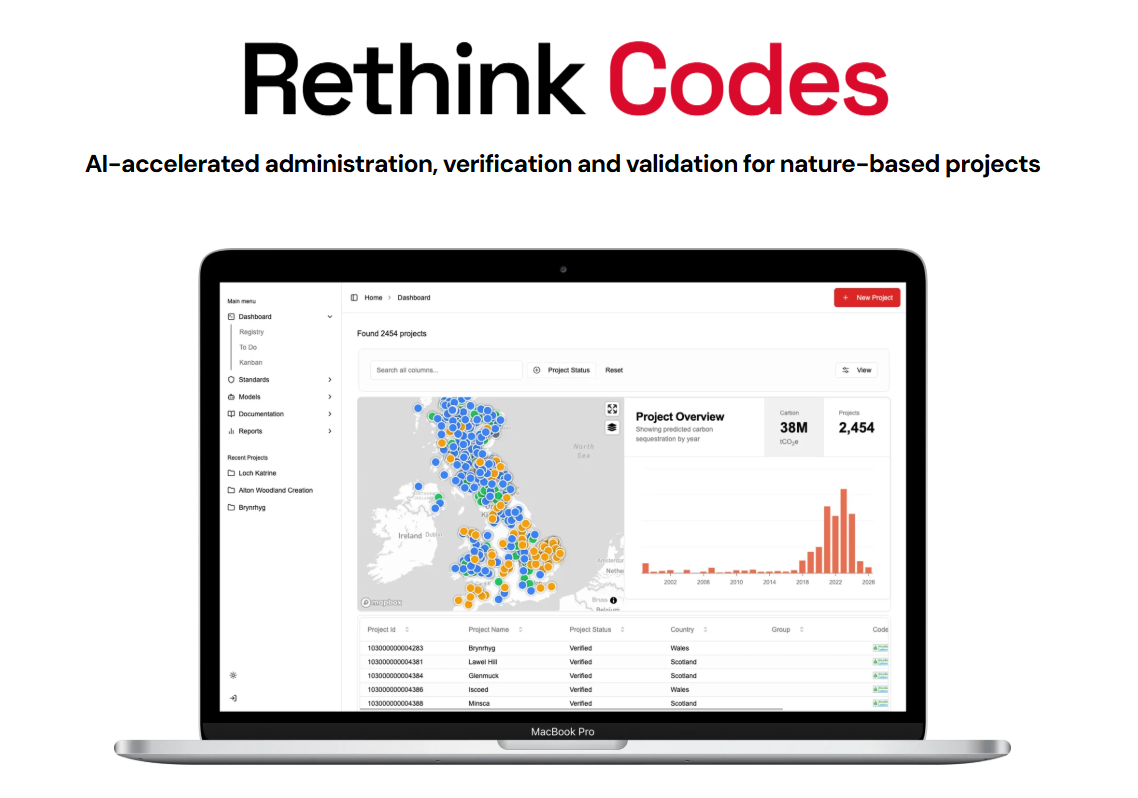
An image of the Rethink Codes platform

We are continuing to explore how new technologies can help with our monitoring and administration processes.

We are working with three companies as part of the CivTech Challenge, a Scottish Government programme which supports public sector innovation. The companies are developing a range of complementary solutions to help the Woodland Carbon and Peatland Codes.

The CivTech work is funded by Scottish Government, Defra, Scottish Forestry and IUCN UK Peatland Programme.

We are also trialling a methodology for using drones to help with monitoring for verifications at year five.
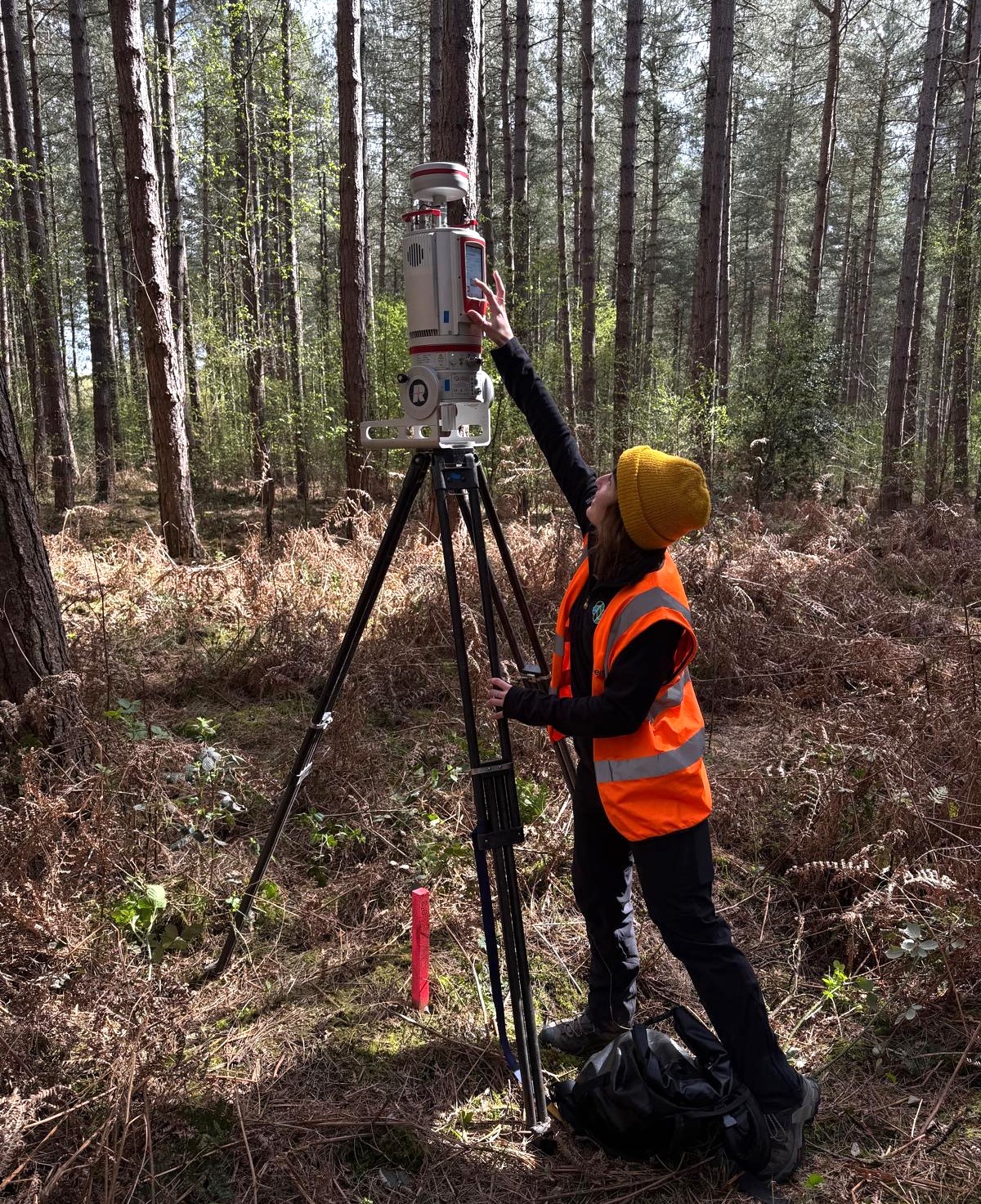
A member of staff using a terrestrial laser scanner in a woodland

Gathering carbon price data

The team also worked with Ecosystem Marketplace and the IUCN UK Peatland Programme to gather updated carbon pricing data for Woodland Carbon Code and Peatland Code projects.

The information shows that Woodland Carbon Code unit prices more than doubled over five years - from an average of £11.02 in 2020 to £28.32 in 2025. The data helps to promote transparency in the UK voluntary carbon market.

Biodiversity measurement and reporting

We continued to work with the IUCN UK Peatland Programme to explore options for biodiversity measurement, reporting and potentially crediting. Building on previous work, phase 2 of the project focused on:

  • Collating and analysing data from pristine or restored woodland and peatland sites
  • Refining and developing metrics
  • Reviewing the costs and potential income from monitoring biodiversity uplift
  • Creating a roadmap for incorporating biodiversity measurement and reporting into the Woodland Carbon and Peatland Codes
  • Providing template documents and improving the process to validate and verify biodiversity projects

The project has been funded by the Facility for Investment Ready Nature in Scotland.
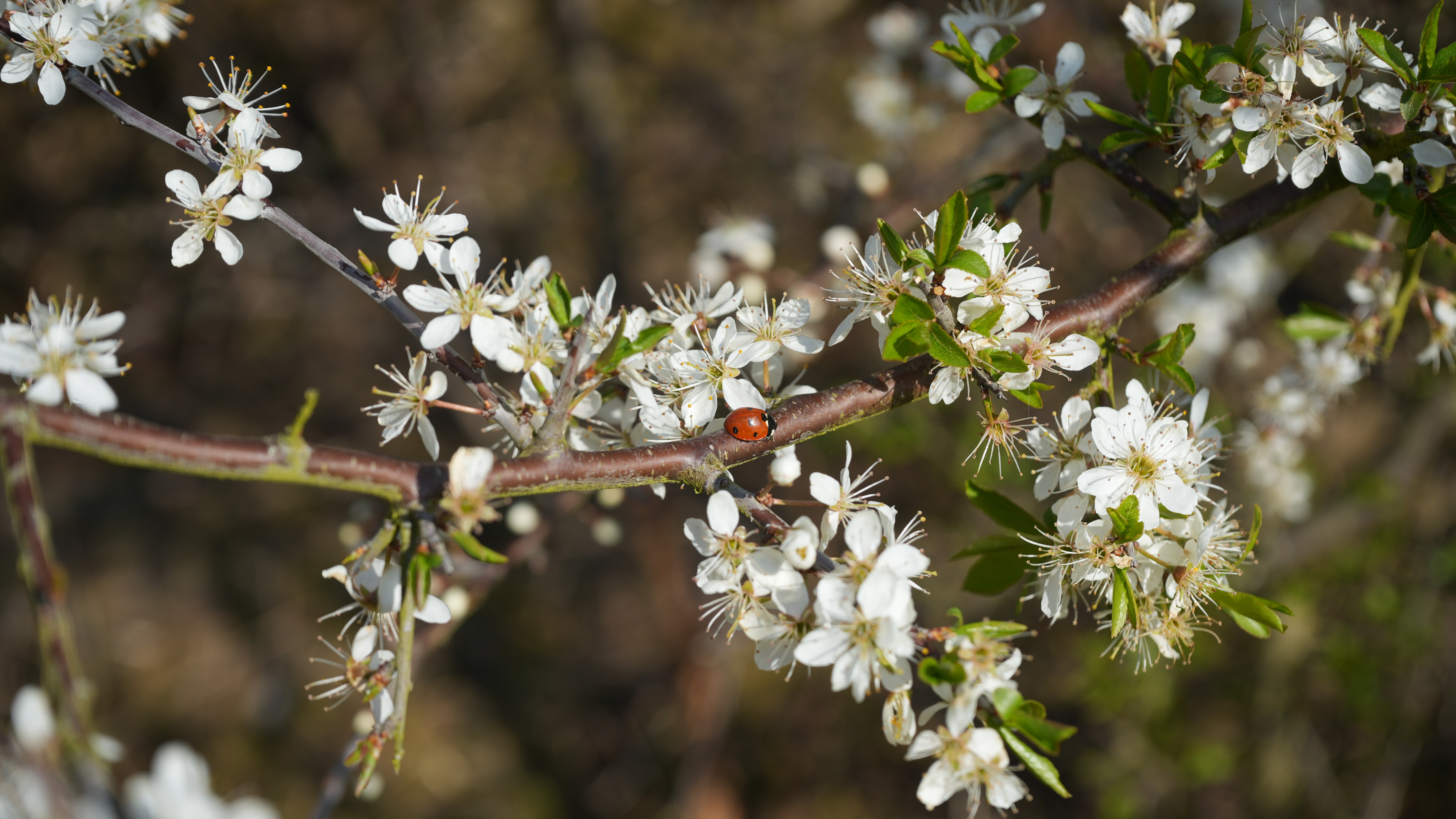
A ladybird on a branch with some white blossom

Woodland Water Code

We have continued to support the development of the Woodland Water Code. Phase 2 focused on:

  • Delivering a validated version 1 of the Woodland Water Code, including calculators and a standardised methodology
  • Aligning with UK best practice and the BSI standards framework for UK nature markets
  • Conducting further piloting of the calculators and associated guidance

The Woodland Water Code is being developed by a consortium led by Forest Research, funded by Defra’s Forestry Research and Development Programme. 
Financial information

Income for 2025 to 2026

SourceAmount
Forestry authorities 
Scottish Forestry£409,324
Forestry Commission£197,799
Other government 
Defra£99,784
Welsh Government£39,029
Forest Research£23,200
 Non-government income 
UK Land Carbon Registry fees£100,210
Civtech project income 
Scottish Government£1,209,633
Defra£146,667
Scottish Forestry£60,000
IUCN UK Peatland Programme£20,000
Total £2,305,647

Costs 2025 to 2026

CostAmount
Staff £788,401
Other administration£30,990
Research and development 
CivTech project costs£536,575
Other research and development£49,956
Total £1,405,922
Project income to carry over to 2026 to 2027Amount
CivTech income£899,725  

Notes:

  1. Income and costs are shown without VAT.
  2. Income from Scottish Forestry, Forestry Commission and Welsh Government includes core funding, additional funding and contributions to a cross-border fund for Woodland Carbon Code research and development.
  3. The tables include income and costs for economic advice delivered by the Woodland Carbon Code and economics team under a cross-border memorandum of understanding.

Looking ahead

In the year ahead, we will build on our progress, advancing innovation, strengthening partnerships and improving delivery. Key projects include:

UK Land Carbon Registry

We will complete the procurement process for a registry provider. The UK Land Carbon Registry stores and displays data about Woodland Carbon Code and Peatland Code projects and units.

Woodland carbon purchase fund

We will continue to support the UK Government project to explore the development of a woodland carbon purchase fund. The fund could stimulate further investment in the woodland carbon market.

Sector engagement

We will establish working groups to draw on the expertise of the sector, helping to inform future development of the code while strengthening collaboration and engagement.

Together, this work will continue to grow high integrity climate action while delivering lasting benefits for nature and communities.


Thank you for all of your support in 2025 to 2026!

Did you find this page helpful?

Rate your experience

Your feedback helps us to improve this website. If you would like a response, please include your email address.

Your feedback helps us to improve this website. If you would like a response, please include your email address.